An AI assistant for your knowledge — on Telegram, by text or voice
A "second brain" I built for myself: ask questions across a Google Workspace Shared Drive and an Obsidian vault, straight from Telegram — typed or spoken. Every answer is grounded in my own notes and documents and cites the source it used, a knowledge graph maps how they connect, and the documents are indexed privately. The same system points at a team's sources.
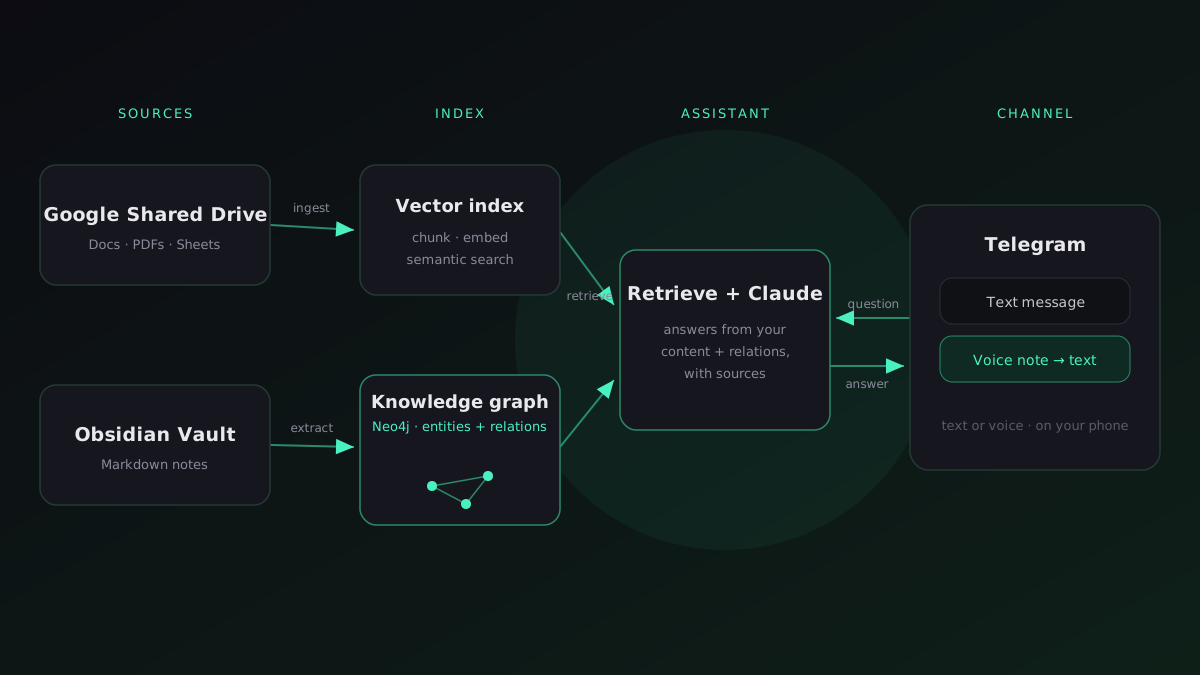
Architecture — Google Drive & Obsidian → hybrid index + knowledge graph → Retrieve + Claude (cited) → Telegram (text & voice).
The challenge
Useful knowledge ends up scattered — documents and spreadsheets in Google Drive, Markdown notes in Obsidian, things you wrote down somewhere months ago. Finding the right answer means digging across tools on a laptop, when half the time the question pops into your head on the move.
What I built
An AI assistant that indexes both a Google Workspace Shared Drive and an Obsidian vault, and answers questions over all of it from a Telegram chat — typed or spoken. I run it as a personal "second brain"; the same pipeline points at a team's own sources and channel.
- Two sources, one brain: ingests a Google Shared Drive (Docs, PDFs, Sheets, CSV/XLSX) and an Obsidian Markdown vault into a single retrieval layer (RAG).
- Finds it two ways: hybrid search combines meaning (semantic vectors) with exact keywords, so it catches both "the gist" and specific terms, names and numbers.
- Cited, not made up: every reply is built from your own documents and shows the note or file behind each point — and it says so plainly when the answer isn't in your sources.
- Private by design: your documents are embedded and searched locally — only the handful of relevant passages are sent to the model at answer time.
- Connections, not just matches: a knowledge graph links related notes, documents and topics, so it can answer "how does this relate to that?", not only "find this".
- Captures too: by voice or text it can save a new note to your Drive or add a task to Todoist — not just answer.
- Ask by voice: send a Telegram voice note and it's transcribed on the spot, then answered like any typed question.
How it works
- Syncs and chunks documents from the Shared Drive and the Obsidian vault, embedding each chunk together with its context (title and section) so short passages stay anchored to where they came from. The index stays current as files change.
- A Telegram bot receives each message; voice notes are transcribed to text first.
- Runs hybrid retrieval — semantic + keyword, fused and re-ranked — and pulls in graph-related passages, with a relevance floor so weak matches don't pad the answer.
- Answers from that context with Claude, and replies in the chat with the answer plus a numbered list of the exact sources it used.
Grounded, cited, and honest
The assistant answers only from your documents and numbers its citations, so every claim is traceable back to the note or file it came from. When the answer genuinely isn't in your sources, it says so instead of guessing — and the questions it couldn't answer are logged, so you can see exactly where the knowledge base has gaps and fill them.
Mapping the connections
Plain retrieval finds passages that match your words. A knowledge graph goes further: as it ingests your Drive and notes, it extracts the key concepts and the links between documents — which notes are similar, which reference which, what builds on what — and keeps them in a graph (built with NetworkX, exportable to GraphML for Gephi or yEd). So the assistant can follow relationships ("what's connected to this contract?", "which notes touch this client?"), not just match keywords.
Why it matters
- Your team's knowledge — Drive, docs, notes, wikis — becomes answerable in plain language.
- Reachable from a tool people already keep open: Telegram (or Slack / WhatsApp), by text or voice.
- Grounded in your own content and cited, so answers stay accurate and traceable.
- Private: documents are indexed locally, so the whole base isn't shipped off to a third party.
- Points at your sources and goes live in about two weeks.
Tech
Built for my own knowledge base (Google Drive + Obsidian). The same pipeline points at your sources — Drive, Notion, Confluence, a docs folder — and the channel your team already uses.
Want your team's knowledge one message away?
I can wire this to your sources and channels in about two weeks. Just get in touch.
Get in touch →